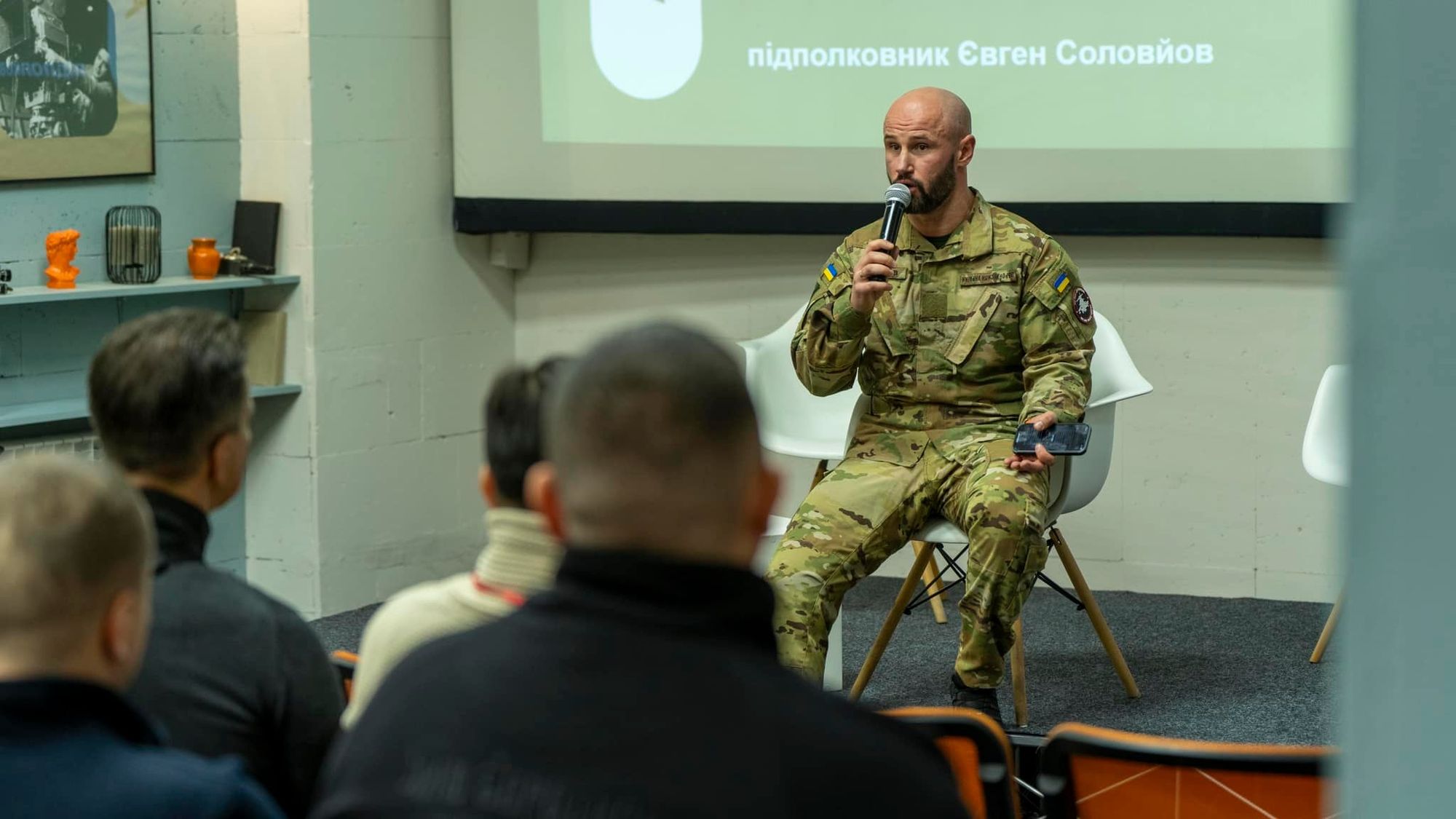

Boryviter Military School held a specialized conference titled "The Experience of Ukrainian Combat Leadership." The event brought together over 100 representatives of the Defense Forces, commands, and military educational institutions to systematize approaches to troop command and control. Key outcomes of the work:
— unified algorithms for commanders' work were defined to ensure combat coordination;
— debriefing (after-action review) protocols were approved as a tool for combat stress control;
— standards for adapting training programs to the current experience of adjacent units were agreed upon.
Officers from the Azov Regiment, the 3rd Separate Assault Brigade, the 67th Separate Mechanized Brigade, and the Army Aviation of the Ground Forces of the Armed Forces of Ukraine determined that the foundation of a unit's capability is the commander's professionalism, resilience, and personal example during mission execution. The practice of applying structured debriefing proves that a systematic review of events restores cohesion, maintains command and control, and prepares crews for further combat operations.
A key issue in command and control currently is the rapid reduction of time for decision-making against the backdrop of an expanding nomenclature of military equipment. A modern commander is forced to analyze more data in a shorter period of time, which requires changing approaches to the training of NCOs and officers.
To address this problem, Boryviter is implementing a Small Unit Command Course (TLP - Troop Leading Procedures). The primary training tool is the Steel Beasts Pro combat simulation system. Using the simulator allows commanders to practice operation planning, maneuvering, and target engagement on up-to-date maps in real time. The result is a rapid closing of training gaps, a shortened decision-making cycle, and increased effectiveness in the execution of combat missions.